

If you are not yet a Makoto+ member, why not become one and get tons of content to help you learn Japanese. Click here for a free trial! Or take the plunge and become a LIFETIME member with a one-time payment (limited time offer)!
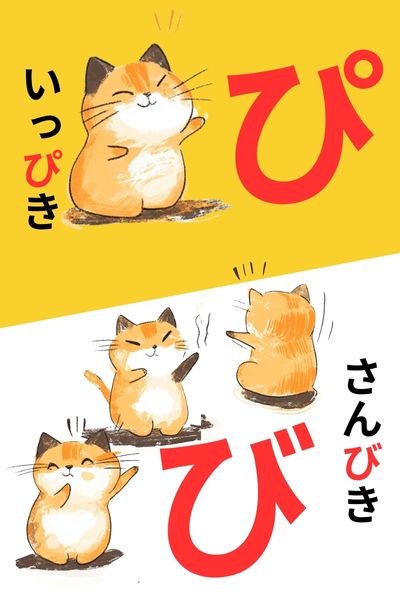
Why is 一匹 pronounced with a ぴ (いっぴき) and 三匹 pronounced with a び?
Great question. As you probably know, 匹 is used when counting small animals like the cats in the image to the right.
Before we get started, if you need a refresher or an introduction to counters in Japanese, see our lesson here first.
But why does the pronunciation change with 1 cat (いっぴき) and 3 cats (さんびき)?
The reason lies in how the は行 (ha-column) sounds interact with small っ and ん. Specifically:
- Rule #1: After a small っ, the "h" sound (as in ひ from ひき, the counter for small animals) changes to a "p" sound. Remember: "Tiny っ packs a punch—turns h into p!"
- Rule #2: After the ん sound, the "h" sound changes to a "b" sound—most of the time. Remember: "Nasally ん gives h a buzz—turns it into b!"
Think of how we soften sounds in English. For example, we often say 'dunno' instead of 'don’t know.' Japanese does the same thing to make words flow smoothly—so the clumsy いちひき becomes いっぴき, and さんひき becomes さんびき
Exceptions
It wouldn’t be fun without a few exceptions, such as 四匹 (よんひき), which retains the "h" sound instead of changing to "b" or "p." Also, it's important to note that some words may also follow different rules depending on their structure, region, or simply due to the speaker's preferences.
Don’t worry about memorizing every rule right now—just focus on listening for these patterns when you hear native speakers. Over time, it will feel natural!
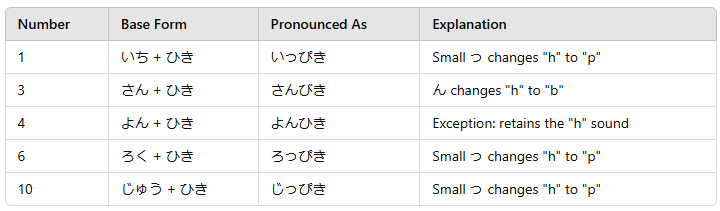
Here’s a simple table illustrating the sound changes:
Notes:
- Small っ Transformation: The っ packs a "punch," turning ひ into ぴ.
- ん Transformation: The nasal ん naturally blends with ひ to create び.
- Exceptions: Some words, like よんひき, follow their own path and retain the original sound.

Before we dig into it further, go through 1-10 with these common counters.
Be sure to look for patterns.
Using 匹 (ひき, Small Animals)
Using 本 (ほん, Long Cylinder Objects)
Using 杯 (はい, cups/glasses)
If you don't like memorizing lists like this, don't worry. You'll pick up the patterns as you learn words. Just remember to correct your mistakes!
Why Does This Happen?
REASON 1: Historical Linguistic Changes
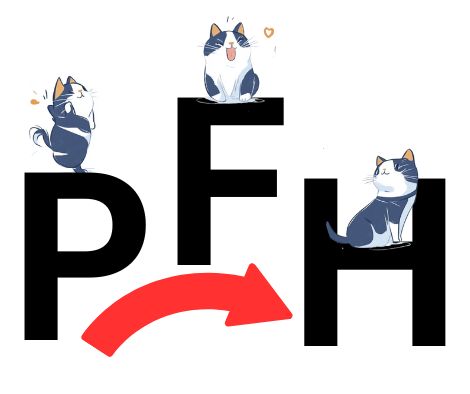
Long ago, the 'h' sounds in Japanese were actually 'p' sounds. Over time, these softened to 'f' and then 'h.' So when you hear いっぴき, you're hearing an echo of ancient Japanese!
Linguists believe this because related languages like Ainu and Ryukyuan (Okinawan) preserve the "p" sound where modern Japanese uses "h." Over time, the "p" sound in Japanese softened to ɸ (similar to "f") and eventually became "h."
REASON 2: The Role of Assimilation
Also, Japanese avoids consecutive consonants that are difficult to pronounce, such as "t" + "p." To make words smoother to say:
- A small っ triggers assimilation, changing "ち" + "ひ" to "っぴ" (いち + ひき → いっぴき).
- Similarly, "ん" before "h" changes the sound to "b" (さん + ひき → さんびき).
REASON 3: Practicality
This transformation also makes pronunciation easier. Compare:
- いちひき → いっぴき (shorter and smoother)
- さんひき → さんびき (natural flow after nasal ん)
Not Just Numbers
These changes are common not only in counters but also in regular words. For example:
- 日本 (にほん) is often pronounced にっぽん, especially in formal or emphatic contexts, due to the same principle.
Fun fact: In Japanese, even imaginary animals get counted with 匹! If you’re talking about three dragons, they’d be さんびきのドラゴン.
What About Words with "P" Sounds?
Native Words
Interestingly, there are very few native Japanese words with a "p" sound today. Those that exist often come from onomatopoeia or emphatic expressions:
- やっぱり (still; as expected)
- さっぱり (completely; refreshing)
- ぱっと (suddenly; quickly)
- ぴかぴか (shiny)
- ぽかぽか (warm; cozy)
The "p" sound remains in these words because it reinforces the mimetic or emphatic meaning.
Loanwords
Most "p" sounds in modern Japanese come from foreign loanwords (外来語), introduced primarily during the Meiji period:
- パン (bread, from Portuguese)
- ペン (pen, from English)
- ポケット (pocket, from English)
The Special Case of ん + "H"
When ん precedes an "h" sound, it typically changes to "b" (e.g., さんびき). This shift happens in many cases because the nasal "ん" naturally blends with a voiced consonant, making it easier to say.
However, with numbers, high-frequency usage may solidify exceptions, as seen with よんひき (四匹), which retains the "h" sound instead of changing to "b" or "p."
Counters can be tricky, but every time you practice, you’re getting closer to sounding like a native! Remember, even native speakers once struggled with this as kids—it’s all part of the journey.
If you are not yet a Makoto+ member, why not become one and get tons of content to help you learn Japanese. Click here for a free trial! Or take the plunge and become a LIFETIME member with a one-time payment (limited time offer)!