Read Slowly

Read Normal Speed

Listen to the story with the above slow or normal speed recordings (the player floats as you scroll), or if you want to focus on a single line, see the individual sound files in the "With Definitions" section. L

  • With Definitions

野口(のぐち)英世(ひでよ)

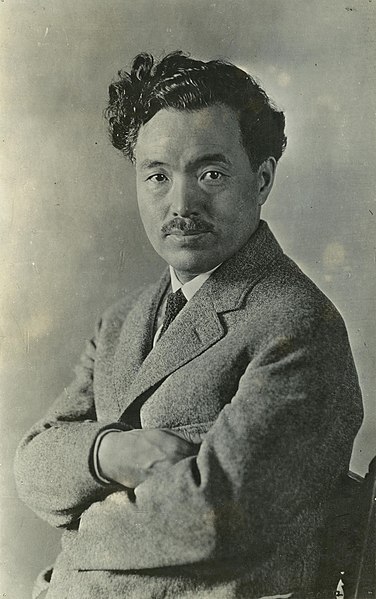
野口(のぐち)英世(ひでよ)は、世界的(せかいてき)に有名(ゆうめい)な細菌(さいきん)学(がく)者(しゃ)です。

Click for Vocabulary

  • 野口(のぐち)英世(ひでよ)  Noguchi Hideyo (November 9, 1876 – May 21, 1928) [also known as Noguchi Seisaku, was a prominent Japanese bacteriologist who discovered the agent of syphilis as the cause of progressive paralytic disease]
  • は (indicates the sentence topic)
  • 世界的(せかいてき)に worldwide; internationally [に is added after 世界的(せかいてき) (worldwide; global; international; universal) to turn it into an adverbial form]
  • 有名(ゆうめい)な細菌(さいきん)学(がく)者(しゃ) famous bacteriologist [有名(ゆうめい)な (famous; prominent); 細菌(さいきん)学(がく)者(しゃ) (bacteriologist)]
  • です be; is
  • 日本(にほん)、エクアドル、アメリカに銅像(どうぞう)があります。

    Click for Vocabulary

  • 日本(にほん) Japan
  • エクアドル Ecuador
  • 銅像(どうぞう)があります there are bronze statues [銅像(どうぞう) (bronze statue; bronze sculpture); (が)あります (there are (non-living things); how to use: Noun + (が)あります; ます-form is the polite form of Japanese verbs)]
  • 日本(にほん)だけでなく、世界中(せかいじゅう)の人(ひと)から大変(たいへん)高(たか)い評価(ひょうか)をされています。

    Click for Vocabulary

  • 日本(にほん)だけでなく not only in Japan but also ~ [日本(にほん) (Japan); だけでなく (not only… but also ~; how to use: Noun + だけでなく)]
  • 世界中(せかいじゅう)の人(ひと) people around the world; people all over the world [世界中(せかいじゅう) (around the world; throughout the world); の (of; from; modifier); 人(ひと) (person; people)]
  • から from
  • 大変(たいへん) very; greatly
  • 高(たか)い high (level); above average (in degree, quality, etc.)
  • 評価(ひょうか)をされています (he) is held (in very high) esteem; is valued [評価(ひょうか) (recognition; acknowledgement; rating highly; praising; valuation); を (indicates the direct object of action); されています (~ています form of される (plain passive positive form of する (to do; to make)) which is used to describe a continuing state or condition of the subject; how to use: Verb て-form + います)]
  • 主(おも)に、梅毒(ばいどく)や黄(おう)熱(ねつ)病(びょう)といった感染症(かんせんしょう)の研究(けんきゅう)をした人(ひと)です。

    )

    )

    Click for Vocabulary

  • 主(おも)に primarily; in great part; mostly; mainly
  • 梅毒(ばいどく)や黄(おう)熱(ねつ)病(びょう) syphilis and yellow fever [梅毒(ばいどく) (syphilis); や (and); 黄(おう)熱(ねつ)病(びょう) (yellow fever)]
  • といった such ... as; or some such
  • 感染症(かんせんしょう)の研究(けんきゅう)をした人(ひと) a researcher of infectious disease; a person who did the research of infectious disease [感染症(かんせんしょう) (infectious disease; infection); の (of; modifier); 研究(けんきゅう) (study; research; investigation); を (indicates the direct object of action); した (did; plain past form of する (to do)); 人(ひと) (person; someone)]
  • です be; is
  • アフリカで黄熱病(おうねつびょう)の研究(けんきゅう)をしている最中(さいちゅう)に自身(じしん)も黄熱病(おうねつびょう)に感染(かんせん)して亡(な)くなりました。

    Click for Vocabulary

    • アフリカで in Africa [アフリカ (Africa); で (in; indicates the location of action)]
    • 黄熱病(おうねつびょう)の研究(けんきゅう)をしている conducting research on yellow fever; studying yellow fever [黄熱病(おうねつびょう) (yellow fever); の (on; of; modifier); 研究(けんきゅう)をしている (studying; ~ている form of 研究(けんきゅう)をする (to study; to conduct research) which is used to describe an ongoing action; how to use: Verb て-form + いる)]
    • 最中(さいちゅう)に in the middle of ~; while; during; in the act of; in mid-flow as [how to use: Verb (ている form) + 最中(さいちゅう)に]
    • 自身(じしん)も oneself [自身(じしん) ((one's) self; oneself); も (emphasizes the preceding word)]
    • 黄熱病(おうねつびょう)に感染(かんせん)して contracted yellow fever and [黄熱病(おうねつびょう) (yellow fever); に (expresses the object of the verb); 感染(かんせん)して (contracted ~ and; て-form of 感染(かんせん)する (to contract; to catch infection; to get infected) which is used to connect to the next phrase, creating the meaning of “and”)] 
    • 亡(な)くなりました died [polite past form of 亡(な)くなる (to die; to pass away)]

    )

    研究(けんきゅう)は高(たか)く評価(ひょうか)されましたが、プライベートでは、

    Click for Vocabulary

  • 研究(けんきゅう) study; research; investigation
  • は (indicates the sentence topic)
  • 高(たか)く評価(ひょうか)されました (he) was highly regarded; was highly evaluated [高(たか)く (highly; adverbial form of 高(たか)い (high); how to form: drop the ending い then add く); 評価(ひょうか)されました (was regarded; polite passive positive past form of 評価(ひょうか)する (to evaluate; to regard; to make an assessment))]
  • が but; although
  • プライベートでは in (his) private (life) [プライベート (private; personal life; (one's) privacy); で (in); は (adds emphasis)]
  • たいへんな浪費家(ろうひか)で借金(しゃっきん)をくりかえしていたことでも知(し)られています。

    Click for Vocabulary

  • たいへんな浪費家(ろうひか) an extravagant spender [たいへんな (heavy; awful; massive; big); 浪費家(ろうひか) (a wasteful person; money-spender; overspender; spend-all)]
  • で (is used for compound sentences) [て form of です (be; is) which is used to connect to the next phrase]
  • 借金(しゃっきん) debt; loan; liabilities; borrowing money
  • くりかえしていた continued to; repeating; repeatedly (borrowed money) [~ていた form of くりかえす (to repeat; to do something over again); ~ていた is the plain past form of ~ている (is used when you talk about something that frequently happens or one’s habitual actions); how to use: Verb て-form + いた]
  • こと non-physical thing [placeholder for nouns]
  • でも even; yet; also; as well
  • 知(し)られています (he) is known [~ています form of 知(し)られる (plain passive positive form of 知(し)る (to know)) which is used to describe a continuing state or condition of the subject; how to use: Verb て-form + います]
  • 人間(にんげん)味(み)あふれる野口(のぐち)英世(ひでよ)の人生(じんせい)をたどってみましょう。

    Click for Vocabulary

  • 人間(にんげん)味(み) humanity; human touch; human kindness; human weakness
  • あふれる to overflow; to brim over; to flood
  • 野口(のぐち)英世(ひでよ)の人生(じんせい)をたどってみましょう let us trace the life of Noguchi Hideyo [野口(のぐち)英世(ひでよ) (Noguchi Hideyo); の (of); 人生(じんせい) ((one's) life); を (indicates the direct object of action); たどってみましょう (let us trace; polite volitional (is used when making a suggestion to one or more people which includes oneself (“Let’s” / “Shall we”)) form of たどってみる (try tracing; from たどる (to trace); ~てみる expresses an exploratory nuance, as in “to try doing something” to find out more about it; how to use: Verb て-form + みる))]
  • 野口(のぐち)英世(ひでよ)は、1(せん)8(はっぴゃく)76(ななじゅうろく)年(ねん)(明治(めいじ)9(きゅう)年(ねん))現在(げんざい)の福島(ふくしま)県(けん)猪苗代(いなわしろ)町(まち)で生(う)まれました。

    Click for Vocabulary

  • 1(せん)8(はっぴゃく)76(ななじゅうろく)年(ねん) year 1876
  • 明治(めいじ)9(きゅう)年(ねん) Meiji 9 [明治(めいじ) (Meiji era (1868.9.8-1912.7.30)); 年(ねん) (year)]
  • 現在(げんざい)の the present-day; as of now; of the moment [現在(げんざい) (the present; present time; now); の (of; modifier)]
  • 福島(ふくしま)県(けん) Fukushima Prefecture [福島(ふくしま) (Fukushima (city, prefecture)); 県(けん) (prefecture (Japan))]
  • 猪苗代(いなわしろ)町(まち) Inawashiro Town [猪苗代(いなわしろ) (Inawashiro); 町(まち) (town; block; neighbourhood)]
  • で in [indicates the location of action]
  • 生(う)まれました (he) was born [polite past form of 生(う)まれる (to be born)]
  • 1(いっ)歳(さい)の時(とき)に囲炉裏(いろり)におちて左(ひだり)手(て)に大(おお)やけどを負(お)いました。  

    Click for Vocabulary

  • 1(いっ)歳(さい)の時(とき)に when (he) was one year old [1(いっ)歳(さい) (one year old; 歳(さい) (... years old; age (of) ...)); の時(とき) (when; how to use: Noun + の + 時(とき)); に (specifies time)]
  • 囲炉裏(いろり)におちて fell into the sunken hearth and [囲炉裏(いろり) (sunken hearth; sunken fireplace); に (into); おちて (fell ~ and; て-form of おちる (to fall; to drop) which is used to connect to the next phrase, creating the meaning of “and”)]
  • 左(ひだり)手(て)に on (his) left hand [左(ひだり) (left; left hand side); 手(て) (hand); に (on)]
  • 大(おお)やけどを負(お)いました suffered a severe burn [大(おお)やけど (large burn or scald); を (indicates the direct object of action); 負(お)いました (suffered; polite past form of 負(お)う (to suffer (an injury)))]
  • 左手(ひだりて)の指(ゆび)が手(て)のひらにくっついてしまい、動(うご)かせなくなりました。

    Click for Vocabulary

  • 左手(ひだりて)の指(ゆび)が the fingers of (his) left hand [左手(ひだりて) (left hand); の (of); 指(ゆび) (fingers); が (marks the subject of the immediate verb phrase)]
  • 手(て)のひらに to the palm of (his) hand [手(て) (hand); の (of); ひら (something broad and flat); に (to)]
  • くっついてしまい attached ~ and [ます-stem form of くっついてしまう (from くっつく (to adhere to; to stick to; to cling to); ~てしまう refers to a regrettable event or negative meaning; how to use: Verb て-from + しまう) which is used to connect to the next phrase, creating the meaning of “and”]
  • 動(うご)かせなくなりました (he) was unable to move (his fingers) [動(うご)かせなく (continuative form of 動(うご)かせない (immovable; unremovable; plain causative negative form of 動(うご)く (to move)) which is used to connect to the next verb なりました; how to form: drop the ending い and add く); なりました (became; polite past form of なる (to become; to get; to turn))]
  • 「この手(て)では農家(のうか)の仕事(しごと)はできない。お前(まえ)は学問(がくもん)をして生(い)きていきなさい。」

    Click for Vocabulary

  • 「」(quotation marks; “ ”)
  • この手(て)で with this hand [この (this); 手(て) (hand); で (by; with)]
  • は (indicates contrast with another option (stated or unstated))
  • 農家(のうか)の仕事(しごと) the work of a farmer [農家(のうか) (farmer); の (of); 仕事(しごと) (work; job; labor)]
  • できない can’t;  impossible; unable [plain potential negative form of する (to do)]
  • お前(まえ)は you [お前(まえ) (you; familiar language); は (indicates the sentence topic)]
  • 学問(がくもん)をして study and [て-form of 学問(がくもん)をする (to study; to learn) which is used to connect to the next phrase, creating the meaning of “and”]
  • 生(い)きていきなさい make a living [from 生(い)きていく (to subsist; to keep on living; to make a living); ~なさい means “do this (soft/firm command)”; how to use: Verb (ます-stem form) + なさい]
  • と母(はは)から諭(さと)されながら、成長(せいちょう)しました。

    Click for Vocabulary

  • と (quotation marker) [is used for quoting speech]
  • 母(はは) mother
  • から from
  • 諭(さと)されながら while being admonished [from 諭(さと)される (being admonished; plain passive positive form of 諭(さと)す (to admonish; to advise; to try to persuade; to exhort)); ~ながら means “while; during; as; simultaneously”; how to use: Verb (ます-stem form) + ながら]
  • 成長(せいちょう)しました grew up [polite past form of 成長(せいちょう)する (to grow up; to get big; to go on in life)]
  • 小学校(しょうがっこう)にはいった野口(のぐち)は、左手(ひだりて)の障害(しょうがい)を理由(りゆう)にいじめられたりもしましたが、

    Click for Vocabulary

  • 小学校(しょうがっこう)にはいった entered elementary school [小学校(しょうがっこう) (elementary school; grade school); に (to; into); はいった (entered; plain past form of はいる (to enter; to come in; to go in; to get in))]
  • 野口(のぐち)は Noguchi [野口(のぐち) (Noguchi); は (indicates the sentence topic)]
  • 左手(ひだりて)の障害(しょうがい) disability of (his) left hand [左手(ひだりて) (left hand); の (of; modifier); 障害(しょうがい) (defect; disability; handicap; impairment)]
  • 左手(ひだりて)の障害(しょうがい)を理由(りゆう)に because of the disability of (his) left hand; due to disability of (his) left hand [左手(ひだりて)の障害(しょうがい) (disability of (his) left hand); を (indicates the direct object of action); 理由(りゆう) (reason); に (on; to)]  
  • いじめられたりもしました was also bullied [いじめられたり (bullied; from いじめられる (plain passive positive form of いじめる (to ill-treat; to bully; to torment; to tease)); ~たり has a function of giving examples and is used when you list multiple actions; how to use: Verb (た form; plain past form) +り); も (also; too; as well); しました (did; polite past form of する (to do))]
  • が but; however
  • 母(はは)から言(い)われたとおり、しっかり勉強(べんきょう)して、たいへん優秀(ゆうしゅう)な成績(せいせき)を収(おさ)めました。

    Click for Vocabulary

  • 言(い)われたとおり as (his mother) had told (him) [言(い)われた (had told; plain passive positive past form of 言(い)う (to say; to tell)); とおり (as ~; in the way; how to use: Verb (た form; casual past) + とおり)]
  • しっかり properly; well; sufficiently; hard (working, etc.)
  • 勉強(べんきょう)して studied and [て-form of 勉強(べんきょう)する (to study) which is used to connect to the next phrase, creating the meaning of “and”]
  • たいへん very; greatly
  • 優秀(ゆうしゅう)な成績(せいせき) excellent grades [優秀(ゆうしゅう)な (excellent; brilliant; outstanding); 成績(せいせき) (results; record; grades; marks)]
  • 収(おさ)めました achieved [polite past form of 収(おさ)める (to achieve (results, success, etc.); to obtain; to get; to gain)]
  • 野口(のぐち)の家(いえ)は、貧(まず)しい農家(のうか)でしたから、小学校(しょうがっこう)卒業(そつぎょう)後(ご)、自分(じぶん)のお金(かね)で中学校(ちゅうがっこう)には行(い)けませんでした。   

    Click for Vocabulary

  • 野口(のぐち)の家(いえ) Noguchi's family [野口(のぐち) (Noguchi); の (‘s; indicates possessive); 家(いえ) (family; household)]
  • 貧(まず)しい poor; needy
  • 農家(のうか)でした was a farmer [農家(のうか) (farmer; farming family); でした (was/were; polite past form of です (be; is); is a polite past tense marker, typically used with nouns and な-adjectives)]
  • から so; because; since
  • 小学校(しょうがっこう)卒業(そつぎょう)後(ご) after graduating from elementary school [小学校(しょうがっこう) (elementary school; grade school); 卒業(そつぎょう) (graduation; completion (of a course)); 後(ご) (after)]
  • 自分(じぶん)のお金(かね)で with (his) own money [自分(じぶん) (myself; yourself; oneself; himself; herself); の (of; modifier); お金(かね) (money); で (with; by)]
  • 中学校(ちゅうがっこう)には to junior high school [中学校(ちゅうがっこう) (junior high school; middle school; lower secondary school); に (to); は (adds emphasis)]
  • 行(い)けませんでした could not go [polite potential negative past form of 行(い)く (to go)]
  • しかし、学校(がっこう)の先生(せんせい)が野口(のぐち)の優秀(ゆうしゅう)さを認(みと)め、学費(がくひ)を払(はら)ってくれたので、彼(かれ)は中学校(ちゅうがっこう)に入(はい)ることができました。

    Click for Vocabulary

  • しかし however; but
  • 学校(がっこう)の先生(せんせい)が a school teacher [学校(がっこう) (school); の (modifier); 先生(せんせい) (teacher; instructor; master); が (marks the subject of the immediate verb phrase)]
  • 優秀(ゆうしゅう)さ (Noguchi's) excellence; distinction
  • 認(みと)め recognized ~ and [ます-stem form of 認(みと)める (to recognize; to observe; to notice) which is used to connect to the next phrase, creating the meaning of “and”]
  • 学費(がくひ)を払(はら)ってくれた paid (his) tuition [学費(がくひ) (tuition; school expenses); を (indicates the direct object of action); 払(はら)ってくれた (paid for (him); from 払(はら)う (to pay (e.g. money, bill)); ~てくれた is the plain past form of ~てくれる (to do a favor; to do something for someone; how to use: Verb て-form + くれる))]
  • ので so; because of ...; the reason is ...
  • 彼(かれ)は he [彼(かれ) (he; him); は (indicates the sentence topic)]
  • 中学校(ちゅうがっこう)に入(はい)ることができました (he) was able to enter junior high school [中学校(ちゅうがっこう) (junior high school; middle school; lower secondary school); に (in; to; expresses the object of the verb); 入(はい)る (to enter; to come in; to go in); ことができました (was able; polite past form of ことができる (can; able to; how to use: Verb (dictionary form) + ことができる))]
  • そして、彼(かれ)は自分(じぶん)の左手(ひだりて)の障害(しょうがい)のつらさを作文(さくぶん)に書(か)き、学校(がっこう)で発表(はっぴょう)しました。

    Click for Vocabulary

  • そして and; and then; thus
  • 彼(かれ) he; him
  • 自分(じぶん) myself; yourself; oneself; himself; herself
  • の of; ‘s [modifier]
  • 左手(ひだりて) left hand 
  • 障害(しょうがい) disorder; defect; disability; handicap; impairment
  • つらさ pain; bitterness
  • 作文(さくぶん) writing (an essay, prose, etc.); composition
  • に in; to
  • 書(か)き wrote ~ and [ます-stem form of 書(か)く (to write; to compose; to pen) which is used to connect to the next phrase, creating the meaning of “and”]
  • 学校(がっこう)で発表(はっぴょう)しました presented (it) at school [学校(がっこう) (school); で (at; indicates the location of action); 発表(はっぴょう)しました (presented; polite past form of 発表(はっぴょう)する (to present; to deliver; to go public))]
  • その作文(さくぶん)に感動(かんどう)したたくさんの人(ひと)たちからお金(かね)が集(あつ)まり、彼(かれ)は左手(ひだりて)の手術(しゅじゅつ)を受(う)けることになりました。

    Click for Vocabulary

  • その作文(さくぶん)に by that essay [その (that; the); 作文(さくぶん) (writing (an essay, prose, etc.); composition); に (by)]
  • 感動(かんどう)した was/were moved [plain past form of 感動(かんどう)する (be moved; be blown away)]
  • たくさんの人(ひと)たち many people [たくさん (a lot; lots; plenty; many; a large number); の (modifier); 人(ひと)たち (people; たち is a pluralizing suffix)]
  • から from
  • お金(かね)が money [お金(かね) (money); が (marks the subject of the immediate verb phrase)]
  • 集(あつ)まり raised [ます-stem form of 集(あつ)まる (to gather; to collect) which is used to connect to the next phrase]
  • 左手(ひだりて)の手術(しゅじゅつ)を受(う)ける to undergo surgery on (his) left hand [左手(ひだりて) (left hand); の (on; of; modifier); 手術(しゅじゅつ) (surgery; operation; procedure); を (indicates the direct object of action); 受(う)ける (to undergo (e.g. surgery); to take; to accept; to receive)]
  • ことになりました it turned out that [polite past form of ことになる (it has been decided that..; it turns out that..; how to use: Verb (dictionary form) + ことになりました)]
  • 手術(しゅじゅつ)は成功(せいこう)し、完全(かんぜん)ではありませんでしたが、左手(ひだりて)の指(ゆび)が動(うご)くようになりました。   

    Click for Vocabulary

    • 手術(しゅじゅつ)は the surgery [手術(しゅじゅつ) (surgery; operation; procedure); は (indicates the sentence topic)]
    • 成功(せいこう)し became successful, and [ます-stem form 成功(せいこう)する (become successful; get successful; achieve success) which is used to connect to the next phrase, creating the meaning of “and”]
    • 完全(かんぜん)ではありませんでした (it) was not completely; was not perfect; was not complete [完全(かんぜん) (perfect; complete); ではありませんでした (was not; how to use: Noun/な-adjective + ではありませんでした)]
    • が although; but; however
    • 左手(ひだりて)の指(ゆび) the fingers of (his) left hand [左手(ひだりて) (left hand); の (of); 指(ゆび) (finger)]
    • 動(うご)くようになりました (he) was able to move (the fingers); started to move [動(うご)く (to move); ようになりました (became able to…; started to…)]

    この時(とき)、彼(かれ)はとても感動(かんどう)して、「医者(いしゃ)はとてもすばらしい。

    Click for Vocabulary

  • この時(とき) at this time; in this instance [この (this); 時(とき) (time; moment; occasion)]
  • 彼(かれ) he; him
  • は (indicates the sentence topic)
  • とても very; exceedingly
  • 感動(かんどう)して (he) was moved and [て-form of 感動(かんどう)する (be moved) which is used to connect to the next phrase, creating the meaning of “and”]
  • 「」(quotation marks; “ ”)
  • 医者(いしゃ) doctor; physician
  • すばらしい wonderful; splendid; magnificent; amazing
  • 私(わたし)の人生(じんせい)を変(か)えてくれた!私(わたし)も医者(いしゃ)になりたい!!」

    Click for Vocabulary

  • 私(わたし)の人生(じんせい)を変(か)えてくれた changed my life [私(わたし) (I; me); の (‘s; of; indicates possessive); 人生(じんせい) ((one's) life); を (indicates the direct object of action); 変(か)えてくれた (changed; from 変(か)える (to change; to alter; to transform); ~てくれた is the plain past form of ~てくれる (to do a favor; to do something for someone); how to use: Verb て-form + くれた)]
  • も too; also
  • 医者(いしゃ)になりたい want to be a doctor [医者(いしゃ) (doctor; physician); に (expresses the result of change); なりたい (want to become; from なる (to change; to turn; to become; to get); ~たい means “want to do something”; how to use: Verb (ます-stem form) + たい)]
  • と医学(いがく)の道(みち)に進(すす)むことを決心(けっしん)しました。

    Click for Vocabulary

  • と (quotation marker) [is used for quoting speech]
  • 医学(いがく)の道(みち)に進(すす)む go into medicine; take up medicine [医学(いがく) (medical science; medicine); の (of; modifier); 道(みち) (road; path); に (into); 進(すす)む (to advance; to go forward)]
  • こと (nominalizer) [turns the preceding phrase into a noun phrase]
  • 決心(けっしん)しました decided [polite past form of 決心(けっしん)する (to decide; to determine; to make up one's mind)]
  • 医師(いし)免許(めんきょ)を取(と)るために上京(じょうきょう)した野口(のぐち)は、猛勉強(もうべんきょう)の末(すえ)、短期間(たんきかん)で試験(しけん)に合格(ごうかく)しました。

    Click for Vocabulary

  • 医師(いし)免許(めんきょ) physician's license; doctor's license; medical license; license to practice medicine [医師(いし) (doctor; physician); 免許(めんきょ) (license; permission; permit)]
  • 取(と)るために in order to obtain [取(と)る (to get; to obtain; to acquire); ために (for; in order to; how to use: Verb (dictionary form) + ために)]
  • 上京(じょうきょう)した moved to Tokyo [plain past form of 上京(じょうきょう)する (to come to Tokyo; to move up to Tokyo; be in Tokyo)]
  • 猛勉強(もうべんきょう)の末(すえ) after intense study [猛勉強(もうべんきょう) (studying very hard; studying like mad); ~の末(すえ) (as a conclusion of; (finally) after; how to use: Noun + の末(すえ))]
  • 短期間(たんきかん)で in a short time [短期間(たんきかん) (short term; short time; 短(たん) (short; brief); 期間(きかん) (period; term; interval)); で (in)]
  • 試験(しけん)に合格(ごうかく)しました passed the exam [試験(しけん) (examination; exam; test); に (expresses the object of the verb); 合格(ごうかく)しました (passed; polite past form of 合格(ごうかく)する (to pass; to make it in))]
  • 医学(いがく)以外(いがい)にもドイツ語(ご)、英語(えいご)なども勉強(べんきょう)しました。  

    Click for Vocabulary

  • 医学(いがく)以外(いがい)にも in addition to medicine; besides medicine [医学(いがく) (medical science; medicine); 以外(いがい)にも (besides, in addition to, over and above; how to use: Noun + 以外(いがい)にも)] 
  • ドイツ語(ご) German language [ドイツ (Germany); 語(ご) (language)]
  • 英語(えいご) English language
  • など et cetera; etc.; and the like; and so forth
  • も too; also
  • 勉強(べんきょう)しました studied [polite past form of 勉強(べんきょう)する (to study)]
  • そして、アメリカに行(い)くチャンスをつかみました。

    Click for Vocabulary

  • そして and; and then
  • アメリカに to the United States [アメリカ (United States); に (to)]
  • 行(い)く to go
  • チャンスをつかみました seized the chance [チャンス (chance; opportunity); を (indicates the direct object of action); つかみました (seized; polite past form of つかむ (to seize; to catch; to hold))]
  • 1900(せんきゅうひゃく)年(ねん)(明治(めいじ)33(さんじゅうさん)年(ねん))、アメリカに渡(わた)った野口(のぐち)はペンシルベニア大学(だいがく)で蛇毒(じゃどく)の研究(けんきゅう)をして論文(ろんぶん)にまとめました。

    Click for Vocabulary

  • 1900(せんきゅうひゃく)年(ねん) year 1900
  • 明治(めいじ)33(さんじゅうさん)年(ねん) Meiji 33 [明治(めいじ) (Meiji era (1868.9.8-1912.7.30)); 年(ねん) (year)]
  • アメリカに to the United States [アメリカ ((United States of) America; United States; US; USA); に (to)]
  • 渡(わた)った went across [plain past form of 渡(わた)る (to cross over; to go across)]
  • ペンシルベニア大学(だいがく)で at the University of Pennsylvania [ペンシルベニア (Pennsylvania); 大学(だいがく) (university; college); で (at)]
  • 蛇毒(じゃどく)の研究(けんきゅう)をして conducted research on snake venom ~ and [蛇毒(じゃどく) (snake venom; snake toxin); の (on; modifier); 研究(けんきゅう)をして (conducted research ~ and; て-form of 研究(けんきゅう)をする (to conduct research; to study) which is used to connect to the next phrase, creating the meaning of “and”)]
  • 論文(ろんぶん)にまとめました put together in an article [論文(ろんぶん) (thesis; essay; treatise; paper; article); に (in); まとめました (put together; summarized; polite past form of まとめる (to put (it all) together; to summarize))]
  • その論文(ろんぶん)は大変(たいへん)高(たか)い評価(ひょうか)を得(え)ました。

    Click for Vocabulary

  • その that; the
  • 論文(ろんぶん)は the thesis [論文(ろんぶん) (thesis); は (indicates the sentence topic)]
  • 大変(たいへん) very; greatly
  • 高(たか)い high (level); above average (in degree, quality, etc.)
  • 評価(ひょうか)を得(え)ました acclaimed [評価(ひょうか) (appreciation; recognition; acknowledgement; rating highly; praising); を (indicates the direct object of action); 得(え)ました (gained; polite past form of 得(え)る (to get; to earn; to acquire; to procure; to gain; to obtain))]
  • その後(ご)、ロックフェラー研究所(けんきゅうじょ)に移(うつ)り、数々(かずかず)の研究(けんきゅう)と成果(せいか)を発表(はっぴょう)しました。

    Click for Vocabulary

  • その後(ご) later [その (that; the); 後(ご) (after; later)]
  • ロックフェラー研究所(けんきゅうじょ)に to the Rockefeller Research Institute [ロックフェラー (Rockefeller); 研究所(けんきゅうじょ) (research establishment; research institute; laboratory); に (to)]
  • 移(うつ)り (he) moved [ます-stem form of 移(うつ)る (to move; to transfer) which is used to connect to the next phrase]
  • 数々(かずかず)の研究(けんきゅう) numerous studies [数々(かずかず) (many; numerous; various; large number of); の (of; modifier); 研究(けんきゅう) (study; research; investigation)]
  • と and
  • 成果(せいか)を発表(はっぴょう)しました published the result [成果(せいか) ((good) result; outcome); 発表(はっぴょう)しました (published; polite past form of 発表(はっぴょう)する (to publish; to release; to go public))]
  • のちに、研究(けんきゅう)成果(せいか)のいくつかは否定(ひてい)されましたが、

    Click for Vocabulary

  • のちに later on; subsequently; by and by
  • 研究(けんきゅう)成果(せいか)のいくつか some of (his) research findings [研究(けんきゅう) (study; research; investigation); 成果(せいか) ((good) result; outcome; findings); の (of); いくつか ((a) few; some; several)]
  • 否定(ひてい)されました was/were rejected [polite passive positive past form of 否定(ひてい)する (to deny; to reject)]
  • が although; but; however
  • それでも膨大(ぼうだい)な資料(しりょう)と研究(けんきゅう)、実験(じっけん)を重(かさ)ねて「日本人(にほんじん)は寝(ね)ないのか?」と言(い)われるほど、研究(けんきゅう)に没頭(ぼっとう)しました。

    Click for Vocabulary

  • それでも but (still); and yet; nevertheless
  • 膨大(ぼうだい)な資料(しりょう) vast amount of data [膨大(ぼうだい)な (huge; vast; enormous; large); 資料(しりょう) (data; document)]
  • 研究(けんきゅう) study; research; investigation
  • 実験(じっけん) experiment; experimentation
  • 重(かさ)ねて went through repeatedly [て-form of 重(かさ)ねる (to repeat many times over; to go through repeatedly) which is used to connect to the next phrase] 
  • 「」(quotation marks; “ ”)
  • 日本人(にほんじん) Japanese; Japanese people
  • 寝(ね)ないのか? (Japanese people) don’t sleep? [寝(ね)ない (don’t sleep; plain negative form of 寝(ね)る (to sleep)); のか (questioning the preceding statement; sentence ending particle)]
  • と (quotation marker)
  • 言(い)われる is said; be told [plain passive positive form of 言(い)う (to say; to tell)]
  • ほど extent; degree
  • 研究(けんきゅう)に to (his) research [研究(けんきゅう) (research); に (to; for; with)]
  • 没頭(ぼっとう)しました devoted oneself [polite past form of 没頭(ぼっとう)する (to devote oneself; to immerse oneself; to engross oneself)]
  • まだワクチンのなかった黄熱病(おうねつびょう)が流行(りゅうこう)すると、エクアドルに行(い)きました。

    Click for Vocabulary

  • まだ (not) yet
  • ワクチンのなかった there was no vaccine [ワクチン (vaccine); の (modifier); なかった (there was no; plain negative past form of ある (there is/are (non-living things); to exist))]
  • 黄熱病(おうねつびょう)が yellow fever [黄熱病(おうねつびょう) (yellow fever); が (marks the subject of the immediate verb phrase)]
  • 流行(りゅうこう)する spread; become epidemic
  • と when; if [is placed after a verb (plain form) to form a conditional]
  • エクアドルに to Ecuador [エクアドル (Ecuador); に (to)]
  • 行(い)きました went [polite past form of 行(い)く (to go)]
  • また、ペルーではペルーの風土病(ふうどびょう)も研究(けんきゅう)しました。

    Click for Vocabulary

  • また also; too; as well
  • ペルー Peru
  • では in [で (in; indicates the location of action); は (adds emphasis)]
  • ペルーの風土病(ふうどびょう) Peruvian endemic diseases [ペルーの (Peruvian; ペルー (Peru); の (‘s; of; indicates possessive)); 風土病(ふうどびょう) (endemic disease; local disease)]
  • も also
  • 研究(けんきゅう)しました studied [polite past form of 研究(けんきゅう)する (to study; to engage in research; to make researches)]
  • 最後(さいご)に、アフリカのガーナで黄熱病(おうねつびょう)の研究(けんきゅう)をしているとき、自(みずか)らも黄熱病(おうねつびょう)にかかって51(ごじゅういっ)歳(さい)で亡(な)くなりました。

    Click for Vocabulary

  • 最後(さいご)に finally; lastly; at the end; for the final time [最後(さいご) (last; end; final); に (at; for; in)]
  • アフリカのガーナで in Ghana, Africa; in Ghana of Africa  [アフリカ (Africa); の (of; modifier); ガーナ (Ghana); で (in)]
  • 黄熱病(おうねつびょう)の研究(けんきゅう)をしているとき when researching yellow fever [黄熱病(おうねつびょう) (yellow fever); の (modifier); 研究(けんきゅう)をしている (researching; ~ている form of 研究(けんきゅう)をする (to study; to conduct research) which is used to describe an ongoing action; how to use: Verb て-form + いる); とき (time; functions like “when” in English to create a time clause)]
  • 自(みずか)らも (he) himself [自(みずか)ら (himself; oneself; for oneself; personally; in person); も (emphasizes the preceding word)]
  • 黄熱病(おうねつびょう)にかかって contracted yellow fever and [黄熱病(おうねつびょう) (yellow fever); に (expresses the object of the verb); かかって (contracted ~ and; て-form of かかる (to contract (a disease); to suffer from) which is used to connect to the next phrase, creating the meaning of “and”)]
  • 51(ごじゅういっ)歳(さい)で at the age of 51 [歳(さい) (... years old; age (of) ...); で (at; when; indicates time of action)]
  • 亡(な)くなりました died [polite past form of 亡(な)くなる (to die; to pass away)]
  • 人生(じんせい)で3(さん)度(ど)、ノーベル賞(しょう)候補(こうほ)となりました。

    Click for Vocabulary

  • 人生(じんせい)で in (his) life [人生(じんせい) ((one's) life); で (in)]
  • 3(さん)度(ど) three times [度(ど) (time (three times, each time, etc.); times)]
  • ノーベル賞(しょう) Nobel Prize [ノーベル (Nobel); 賞(しょう) (prize; award)]
  • 候補(こうほ) candidate; contender
  • となりました became (with finality) [polite past form of となる (to become; it usually implies “finality”; how to use: Noun + となる)]
  • また亡(な)くなったガーナでは1979(せんきゅうひゃくななじゅうきゅう)年(ねん)に野口(のぐち)医学(いがく)研究所(けんきゅうじょ)が設立(せつりつ)され、研究(けんきゅう)が続(つづ)けられています。  

    Click for Vocabulary

  • また also; and; in addition; besides; moreover
  • 亡(な)くなった died [plain past form of 亡(な)くなる (to die; to pass away)]
  • ガーナ Ghana
  • では in [で (in; indicates the location of action); は (adds emphasis)]
  • 1979(せんきゅうひゃくななじゅうきゅう)年(ねん)に in year 1979 [年(ねん) (year); に (in)]
  • 野口(のぐち)医学(いがく)研究所(けんきゅうじょ)が Noguchi Medical Research Institute [野口(のぐち) (Noguchi); 医学(いがく) (medical science; medicine); 研究所(けんきゅうじょ) (research establishment; research institute; laboratory); が (marks the subject of the immediate verb phrase)]
  • 設立(せつりつ)され was established ~ and [ます-stem form of 設立(せつりつ)される (be established; be founded; plain passive positive form of 設立(せつりつ)する (to establish; to found; to form)) which is used to connect to the next phrase, creating the meaning of “and”]
  • 研究(けんきゅう) research; study; investigation
  • 続(つづ)けられています (the research) continues [~ています form of 続(つづ)けられる (be continued; continue; go on; plain passive positive form of 続(つづ)ける (to continue; to keep up; to keep on)) which is used to describe a continuous action; how to use: Verb (て-form) + います; ます-form is the polite form of Japanese verbs]
  • 自身(じしん)の仕事(しごと)、研究(けんきゅう)ではとても素晴(すば)らしい業績(ぎょうせき)をのこした野口(のぐち)ですが、

    Click for Vocabulary

  • 自身(じしん)の仕事(しごと) (his) own work [自身(じしん) ((one's) self; oneself); の (‘s; indicates possessive); 仕事(しごと) (work; job; labour; task; occupation; employment)]
  • 研究(けんきゅう)では in research [研究(けんきゅう) (research); では (in)]
  • とても very; exceedingly
  • 素晴(すば)らしい wonderful; splendid; magnificent; great
  • 業績(ぎょうせき) achievement; performance; results; work; contribution
  • のこした left [polite past form of のこす (to leave (behind))]
  • です be; is
  • が although; but; however
  • 金銭(きんせん)感覚(かんかく)がなく、友人(ゆうじん)から借(か)りた高額(こうがく)なお金(かね)をたったの2(に)か月(げつ)で使(つか)い切(き)ってしまったこともありました。

    Click for Vocabulary

  • 金銭(きんせん)感覚(かんかく)がなく had no sense for money and [金銭(きんせん) (money; cash); 感覚(かんかく) (sense); が (marks the subject of the immediate verb phrase); なく (had no ~ and; continuative form of ない (have no; plain negative form of ある (to have)) which is used to connect to the next phrase, creating the meaning of “and”; how to form: drop the ending い then add く)]
  • 友人(ゆうじん)から from a friend [友人(ゆうじん) (friend); から (from)]
  • 借(か)りた borrowed [plain past form of 借(か)りる (to borrow; to have a loan)]
  • 高額(こうがく)なお金(かね) large sum of money [高額(こうがく)な (large sum (of money); large amount); お金(かね) (money)]
  • たったの2(に)か月(げつ)で in just two months [たった (just; only; merely; but; no more than); の (modifier); 2(に)か月(げつ) (two months; か月(げつ) (counter for months)); で (in)]
  • 使(つか)い切(き)ってしまった spent; used up [from 使(つか)い切(き)る (to use up; to exhaust; to consume); ~てしまった is the plain past form of ~てしまう (to do something by accident, to finish completely); how to use: Verb て-form + しまった]
  • こともありました sometimes (he spent); there were things that were also [polite past form of こともある (it sometimes happens); こと (non-physical thing; placeholder for nouns); も (also; even); ありました (there was/were; polite past form of ある (there is/are))]
  • しかも、研究(けんきゅう)のためではなく、お酒(さけ)を飲(の)んだり、芸者(げいしゃ)と遊(あそ)んだりすることに使(つか)ってしまうというだらしない一(いち)面(めん)もありました。

    Click for Vocabulary

  • しかも moreover; furthermore; and yet
  • 研究(けんきゅう)のためではなく not for research but [研究(けんきゅう) (study; research); のため (for; how to use: Noun + の + ため); ではなく (not ~, but ~; how to use: Noun + ではなく)]
  • お酒(さけ)を飲(の)んだり芸者(げいしゃ)と遊(あそ)んだりする drinking sake and having a good time with geisha girls, and etc. [お酒(さけ)を飲(の)んだり (drinking sake and; お酒(さけ) (alcohol;  liquor; sake; お is a polite/honorific/humble prefix); を (indicates the direct object of action); 飲(の)んだり (drinking and; from 飲(の)む (to drink; to gulp); ~り is used when you list multiple actions; how to use: Verb (た form) + り)); 芸者(げいしゃ) (geisha; geisha girl; a professional female entertainer, usually at traditional banquets); と (with); 遊(あそ)んだりする (having a good time and etc.; from 遊(あそ)ぶ (to enjoy oneself; to have a good time)); 「〜たり〜たりする」means “to do A and B and other stuff (etc./such)”] 
  • こと (nominalizer) [turns the preceding phrase into a noun phrase]
  • に for (purpose)
  • 使(つか)ってしまう end up using [from 使(つか)う (to use); ~てしまう (refers to a regrettable event or negative meaning); how to use: Verb て-form + しまう]
  • という that; that says [is used to define, describe or when you emphasize something]
  • だらしない sloppy; untidy; undisciplined; careless; loose
  • 一(いち)面(めん) one aspect; one side
  • も also; too; as well [emphasizes the preceding word]
  • ありました had [polite past form of ある (to have)]
  • アメリカに留学(りゅうがく)する際(さい)には、

    Click for Vocabulary

  • アメリカに to the U.S. [アメリカ (U.S.; America; United States; US; USA); に (to; expresses the direction and destination)]
  • 留学(りゅうがく)する go abroad for study; go on an overseas study program
  • 際(さい)には when [際(さい)に (when; at the time of; how to use: Verb (dictionary form) + 際(さい)に); は (adds emphasis)]
  • 日本人(にほんじん)女性(じょせい)と婚約(こんやく)して、婚約(こんやく)のためのお金(かね)(結納金(ゆいのうきん))をもらってそのお金(かね)でアメリカにわたりますが、

    Click for Vocabulary

  • 日本人(にほんじん)女性(じょせい) Japanese woman [日本人(にほんじん) (Japanese person); 女性(じょせい) (woman; female)]
  • と with; to
  • 婚約(こんやく)し engaged [ます-stem form of 婚約(こんやく)する (to engage; to become engaged) which is used to connect to the next phrase]
  • 婚約(こんやく)のためのお金(かね) money for the benefit of engagement [婚約(こんやく) (engagement; betrothal); のための (for the benefit of “Noun”; Noun-B is for the benefit of Noun-A; how to use Noun-A + のための + Noun-B); お金(かね) (money)]
  • 結納金(ゆいのうきん) a betrothal money
  • もらって received ~ and [て-form of もらう (to receive; to take; to accept) which is used to connect to the next phrase, creating the meaning of “and”]
  • そのお金(かね)で with that money [その (that; the); お金(かね) (money); で (with; by; indicates means of action)]
  • わたります to cross over; to go across [polite form]
  • が but; however
  • アメリカで婚約(こんやく)を解消(かいしょう)しています。

    Click for Vocabulary

  • アメリカで in America [アメリカ (America); で (in; indicates the location of action)]
  • 婚約(こんやく)を解消(かいしょう)しています broke off the engagement [ています-form of 婚約(こんやく)を解消(かいしょう)する (to break off an engagement; to call off the engagement) which is used to describe the actual state or condition of the subject; how to use: Verb (て-form) + います]
  • 現代(げんだい)なら、「結婚(けっこん)詐欺(さぎ)だ!」と訴(うった)えられるようなこともしたわけです。

    Click for Vocabulary

  • 現代(げんだい)なら in modern times [現代(げんだい) (modern era; modern times; present age); なら (if; in case; if it is the case that)]
  • 「結婚(けっこん)詐欺(さぎ)だ!」と “marriage fraud!” [「結婚(けっこん)詐欺(さぎ)だ!」(“marriage fraud!”;「」(quotation marks; “ ”); 結婚(けっこん) (marriage); 詐欺(さぎ) (fraud; swindle; graft; cheating; trick; scam); だ (assertive; is used to affirm and emphasize your sentence)); と (quotation marker)] 
  • 訴(うった)えられる get sued; be accused [plain passive positive form of 訴(うった)える (to accuse; to bring a case; to sue; to take someone to court)]
  • よう might it be (that); maybe; perhaps [indicates speculation]
  • こと (nominalizer) [turns the preceding phrase into a noun phrase]
  • も too; also [emphasizes the preceding word]
  • した did [plain past form of する (to do; to carry out)]
  • わけ conclusion from reasoning, judgement or calculation based on something read or heard; reason; cause; meaning; circumstances; situation
  • です be; is
  • それでもなぜか友人(ゆうじん)や先輩(せんぱい)、先生(せんせい)たちから好(す)かれ、愛(あい)された野口(のぐち)英世(ひでよ)。

    Click for Vocabulary

  • それでも but (still); and yet; nevertheless; even so
  • なぜか somehow; for some reason; without knowing why
  • 友人(ゆうじん)や先輩(せんぱい) friends and seniors [友人(ゆうじん) (friends); や (and); 先輩(せんぱい) (senior (at work or school); superior)]
  • 先生(せんせい)たち teachers [たち is a pluralizing suffix]
  • から by
  • 好(す)かれ (he) was liked and [ます-stem form of 好(す)かれる (plain passive positive form of 好(す)く (to like; to love; to be fond of)) which is used to connect to the next phrase, creating the meaning of “and”]
  • 愛(あい)された (he) was loved [plain passive positive past form of 愛(あい)す (to love)]
  • 人間(にんげん)としての魅力(みりょく)も持(も)ち合(あ)わせていたのでしょう。

    Click for Vocabulary

  • 人間(にんげん)としての as a human being [人間(にんげん) (human being; human; person; man; mankind); として (as (i.e. in the role of)); の (of; modifier)]
  • 魅力(みりょく) charm; fascination; glamour; attraction
  • も as well; too; also
  • 持(も)ち合(あ)わせていた had [~ていた form of 持(も)ち合(あ)わせる (to happen to have on hand or in stock; to have; to possess); ~ていた is the plain past form of ~ている (is used to describe the actual state or condition of the subject); how to use: Verb て-form + いた]
  • のでしょう (is used to express surprise or admiration of something) [の (emphasizes the declaration); でしょう (functions as an expresser of emotion)]
  • 貧(まず)しい農家(のうか)でしかも左手(ひだりて)にやけどを負(お)うというハンディキャップを持(も)ちながら、

    Click for Vocabulary

  • 貧(まず)しい poor; needy
  • 農家(のうか) farmer
  • で (is used for compound sentences) [て-form of です (be; is) which is used to connect to the next phrase]
  • しかも and yet; moreover
  • 左手(ひだりて)に on (his) left hand [左手(ひだりて) (left hand); に (on)]
  • やけど burn; scald
  • 負(お)う to suffer (an injury); to sustain (a wound); to receive
  • という that; that says [is used to define, describe, and generally just talk about the thing itself]
  • ハンディキャップ handicap
  • 持(も)ちながら while having; although (he) has ~ [from 持(も)つ (to possess; to have); ~ながら (although; while; for contrasting clauses, is used to describe two contradictory situations); how to use: Verb (ます-stem form) + ながら]
  • 世界的(せかいてき)に有名(ゆうめい)な学者(がくしゃ)となった野口(のぐち)英世(ひでよ)。日本(にほん)はもちろん、世界中(せかいじゅう)の人(ひと)から尊敬(そんけい)されています。

    Click for Vocabulary

  • 世界的(せかいてき)に有名(ゆうめい)な学者(がくしゃ)となった became a world-renowned scholar [世界的(せかいてき)に (worldwide; globally); 有名(ゆうめい)な (famous); 学者(がくしゃ) (scholar; academic; scientist); となった (became; plain past form of となる (to become (with finality)); how to use: Noun + となった)]  
  • 日本(にほん)はもちろん not only in Japan but also ~ [日本(にほん) (Japan); はもちろん (not to mention; not only ... but also ~; how to use: Noun + はもちろん)]
  • 世界中(せかいじゅう)の人(ひと) people around the world [世界中(せかいじゅう) (around the world; throughout the world); の (of; modifier); 人(ひと) (people)]
  • から from; by
  • 尊敬(そんけい)されています (he) is respected [~ています form of 尊敬(そんけい)される (plain passive positive form of 尊敬(そんけい)する (to respect; to have a great regard)) which is used to describe a continuing state or condition of the subject; how to use: Verb て-form + います; ます-form is the polite form of Japanese verbs]

  • In Japanese

    野口(のぐち)英世(ひでよ)   

    野口(のぐち)英世(ひでよ)は、世界的(せかいてき)に有名(ゆうめい)な細菌(さいきん)学(がく)者(しゃ)です。日本(にほん)、エクアドル、アメリカに銅像(どうぞう)があります。日本(にほん)だけでなく、世界中(せかいじゅう)の人(ひと)から大変(たいへん)高(たか)い評価(ひょうか)をされています。主(おも)に、梅毒(ばいどく)や黄(おう)熱(ねつ)病(びょう)といった感染症(かんせんしょう)の研究(けんきゅう)をした人(ひと)です。アフリカで黄熱病(おうねつびょう)の研究(けんきゅう)をしている最中(さいちゅう)に自身(じしん)も黄熱病(おうねつびょう)に感染(かんせん)して亡(な)くなりました。研究(けんきゅう)は高(たか)く評価(ひょうか)されましたが、プライベートでは、たいへんな浪費家(ろうひか)で借金(しゃっきん)をくりかえしていたことでも知(し)られています。人間(にんげん)味(み)あふれる野口(のぐち)英世(ひでよ)の人生(じんせい)をたどってみましょう。

    野口(のぐち)英世(ひでよ)は、1(せん)8(はっぴゃく)76(ななじゅうろく)年(ねん)(明治(めいじ)9(きゅう)年(ねん))現在(げんざい)の福島(ふくしま)県(けん)猪苗代(いなわしろ)町(まち)で生(う)まれました。1(いっ)歳(さい)の時(とき)に囲炉裏(いろり)におちて左(ひだり)手(て)に大(おお)やけどを負(お)いました。左手(ひだりて)の指(ゆび)が手(て)のひらにくっついてしまい、動(うご)かせなくなりました。「この手(て)では農家(のうか)の仕事(しごと)はできない。お前(まえ)は学問(がくもん)をして生(い)きていきなさい。」と母(はは)から諭(さと)されながら、成長(せいちょう)しました。小学校(しょうがっこう)にはいった野口(のぐち)は、左手(ひだりて)の障害(しょうがい)を理由(りゆう)にいじめられたりもしましたが、母(はは)から言(い)われたとおり、しっかり勉強(べんきょう)して、たいへん優秀(ゆうしゅう)な成績(せいせき)を収(おさ)めました。

    野口(のぐち)の家(いえ)は、貧(まず)しい農家(のうか)でしたから、小学校(しょうがっこう)卒業(そつぎょう)後(ご)、自分(じぶん)のお金(かね)で中学校(ちゅうがっこう)には行(い)けませんでした。しかし、学校(がっこう)の先生(せんせい)が野口(のぐち)の優秀(ゆうしゅう)さを認(みと)め、学費(がくひ)を払(はら)ってくれたので、彼(かれ)は中学校(ちゅうがっこう)に入(はい)ることができました。そして、彼(かれ)は自分(じぶん)の左手(ひだりて)の障害(しょうがい)のつらさを作文(さくぶん)に書(か)き、学校(がっこう)で発表(はっぴょう)しました。その作文(さくぶん)に感動(かんどう)したたくさんの人(ひと)たちからお金(かね)が集(あつ)まり、彼(かれ)は左手(ひだりて)の手術(しゅじゅつ)を受(う)けることになりました。手術(しゅじゅつ)は成功(せいこう)し、完全(かんぜん)ではありませんでしたが、左手(ひだりて)の指(ゆび)が動(うご)くようになりました。この時(とき)、彼(かれ)はとても感動(かんどう)して、「医者(いしゃ)はとてもすばらしい。私(わたし)の人生(じんせい)を変(か)えてくれた!私(わたし)も医者(いしゃ)になりたい!!」と医学(いがく)の道(みち)に進(すす)むことを決心(けっしん)しました。

    医師(いし)免許(めんきょ)を取(と)るために上京(じょうきょう)した野口(のぐち)は、猛勉強(もうべんきょう)の末(すえ)、短期間(たんきかん)で試験(しけん)に合格(ごうかく)しました。医学(いがく)以外(いがい)にもドイツ語(ご)、英語(えいご)なども勉強(べんきょう)しました。そして、アメリカに行(い)くチャンスをつかみました。1900(せんきゅうひゃく)年(ねん)(明治(めいじ)33(さんじゅうさん)年(ねん))、アメリカに渡(わた)った野口(のぐち)はペンシルベニア大学(だいがく)で蛇毒(じゃどく)の研究(けんきゅう)をして論文(ろんぶん)にまとめました。その論文(ろんぶん)は大変(たいへん)高(たか)い評価(ひょうか)を得(え)ました。

    その後(ご)、ロックフェラー研究所(けんきゅうじょ)に移(うつ)り、数々(かずかず)の研究(けんきゅう)と成果(せいか)を発表(はっぴょう)しました。のちに、研究(けんきゅう)成果(せいか)のいくつかは否定(ひてい)されましたが、それでも膨大(ぼうだい)な資料(しりょう)と研究(けんきゅう)、実験(じっけん)を重(かさ)ねて「日本人(にほんじん)は寝(ね)ないのか?」と言(い)われるほど、研究(けんきゅう)に没頭(ぼっとう)しました。

    まだワクチンのなかった黄熱病(おうねつびょう)が流行(りゅうこう)すると、エクアドルに行(い)きました。また、ペルーではペルーの風土病(ふうどびょう)も研究(けんきゅう)しました。最後(さいご)に、アフリカのガーナで黄熱病(おうねつびょう)の研究(けんきゅう)をしているとき、自(みずか)らも黄熱病(おうねつびょう)にかかって51(ごじゅういっ)歳(さい)で亡(な)くなりました。

    人生(じんせい)で3(さん)度(ど)、ノーベル賞(しょう)候補(こうほ)となりました。また亡(な)くなったガーナでは1979(せんきゅうひゃくななじゅうきゅう)年(ねん)に野口(のぐち)医学(いがく)研究所(けんきゅうじょ)が設立(せつりつ)され、研究(けんきゅう)が続(つづ)けられています。自身(じしん)の仕事(しごと)、研究(けんきゅう)ではとても素晴(すば)らしい業績(ぎょうせき)をのこした野口(のぐち)ですが、金銭(きんせん)感覚(かんかく)がなく、友人(ゆうじん)から借(か)りた高額(こうがく)なお金(かね)をたったの2(に)か月(げつ)で使(つか)い切(き)ってしまったこともありました。しかも、研究(けんきゅう)のためではなく、お酒(さけ)を飲(の)んだり、芸者(げいしゃ)と遊(あそ)んだりすることに使(つか)ってしまうというだらしない一(いち)面(めん)もありました。アメリカに留学(りゅうがく)する際(さい)には、日本人(にほんじん)女性(じょせい)と婚約(こんやく)し、婚約(こんやく)のためのお金(かね)(結納金(ゆいのうきん))をもらってそのお金(かね)でアメリカにわたりますが、アメリカで婚約(こんやく)を解消(かいしょう)しています。現代(げんだい)なら、「結婚(けっこん)詐欺(さぎ)だ!」と訴(うった)えられるようこともしたわけです。

    それでもなぜか友人(ゆうじん)や先輩(せんぱい)、先生(せんせい)たちから好(す)かれ、愛(あい)された野口(のぐち)英世(ひでよ)。人間(にんげん)としての魅力(みりょく)も持(も)ち合(あ)わせていたのでしょう。貧(まず)しい農家(のうか)でしかも左手(ひだりて)にやけどを負(お)うというハンディキャップを持(も)ちながら、世界的(せかいてき)に有名(ゆうめい)な学者(がくしゃ)となった野口(のぐち)英世(ひでよ)。日本(にほん)はもちろん、世界中(せかいじゅう)の人(ひと)から尊敬(そんけい)されています。  


    In English

    Noguchi Hideyo

    Please try to tackle the Japanese first and use this only as needed.

    Noguchi Hideyo was a world-renowned bacteriologist. There are bronze statues of him in Japan, Ecuador, and at the Rockefeller Research Institute in New York, USA. He is held in very high esteem not only in Japan but around the world. He was primarily a researcher of infectious disease such as syphilis and yellow fever. While conducting research on yellow fever in Africa, he himself contracted yellow fever and died. Although his research was highly regarded, in his private life he was known to be an extravagant spender who was constantly in debt. Let us trace the life of Noguchi Hideyo, a man full of humanity.

    Noguchi Hideyo was born in 1876 (Meiji 9) in the present-day Inawashiro Town, Fukushima Prefecture, Japan. When he was one year old, he fell into the sunken hearth and suffered a severe burn on his left hand. The fingers of his left hand became attached to the palm of his hand and he was unable to move them. He grew up with his mother advising him, "You can't work as a farmer with your hands. You should study and make a living as a scholar." When Noguchi entered elementary school, he was sometimes bullied because of the disability of his left hand, but he studied hard and achieved excellent grades, as his mother had told him.

    Noguchi's family was a poor farmer, so he could not afford to go to junior high school after graduating from elementary school. However, a school teacher recognized Noguchi's excellence and paid his tuition, so he was able to enter junior high school. He then wrote an essay about the pain of his left hand disability and presented it at school. His essay was so successful that many people were moved by it and raised money for him to have surgery on his left hand. The surgery was a success, and he was able to move the fingers of his left hand, although not completely. At this time he was very moved and said, "Doctors are so amazing. They changed my life! I want to be a doctor too!!" and decided to pursue a career in medicine.

    Noguchi moved to Tokyo to obtain his medical license, and after intense study, he passed the exam in a short time. In addition to medicine, he also studied German and English. Then, he seized the chance to go to the United States. In 1900 (Meiji 33), Noguchi went to the United States to conduct research on snake venom at the University of Pennsylvania and wrote a paper on the subject. His thesis was highly acclaimed.

    Later, he moved to the  Rockefeller Research Institute, where he conducted numerous studies and published many results. Although some of his research findings were later rejected, he still continued to work with a vast amount of data, research, and experimentation, to the point where he was asked, "Don't the Japanese ever sleep?”

    When yellow fever, for which there was no vaccine yet, broke out, he went to Ecuador. In Peru, he also studied Peruvian endemic diseases. Finally, while researching yellow fever in Ghana, Africa, he himself contracted yellow fever and died at the age of 51.

    He was nominated for the Nobel Prize three times in his life. Also, in Ghana, where he died, the Noguchi Medical Research Institute was established in 1979, and research continues there. Although Noguchi was a man of great achievements in his own work and research, he had no sense for money and once spent a large sum of money borrowed from a friend in just two months. Moreover, he had a sloppy side, using the money not for research but for drinking and having a good time with geisha girls. When he went to the U.S. to study, he got engaged to a Japanese woman, received money for the engagement (a betrothal money), and used the money to go to the U.S., but broke off the engagement in America. In modern times, he would have been accused of “marriage fraud!”

     Yet somehow, Noguchi Hideyo was liked and loved by his friends, seniors, and teachers. He must have had charm as a human being as well. Despite being a poor farmer with the handicap of a burn on his left hand, Noguchi Hideyo became a world-renowned scholar. He is respected not only in Japan but around the world.
    {"email":"Email address invalid","url":"Website address invalid","required":"Required field missing"}
    >